The Jezreel Valley in Judges and Kings
Updated November 29, 2026
נַחַל קִישׁוֹן גְּרָפָם נַחַל קְדוּמִים נַחַל קִישׁוֹן“The Kishon stream swept them away, that ancient stream, the stream Kishon”
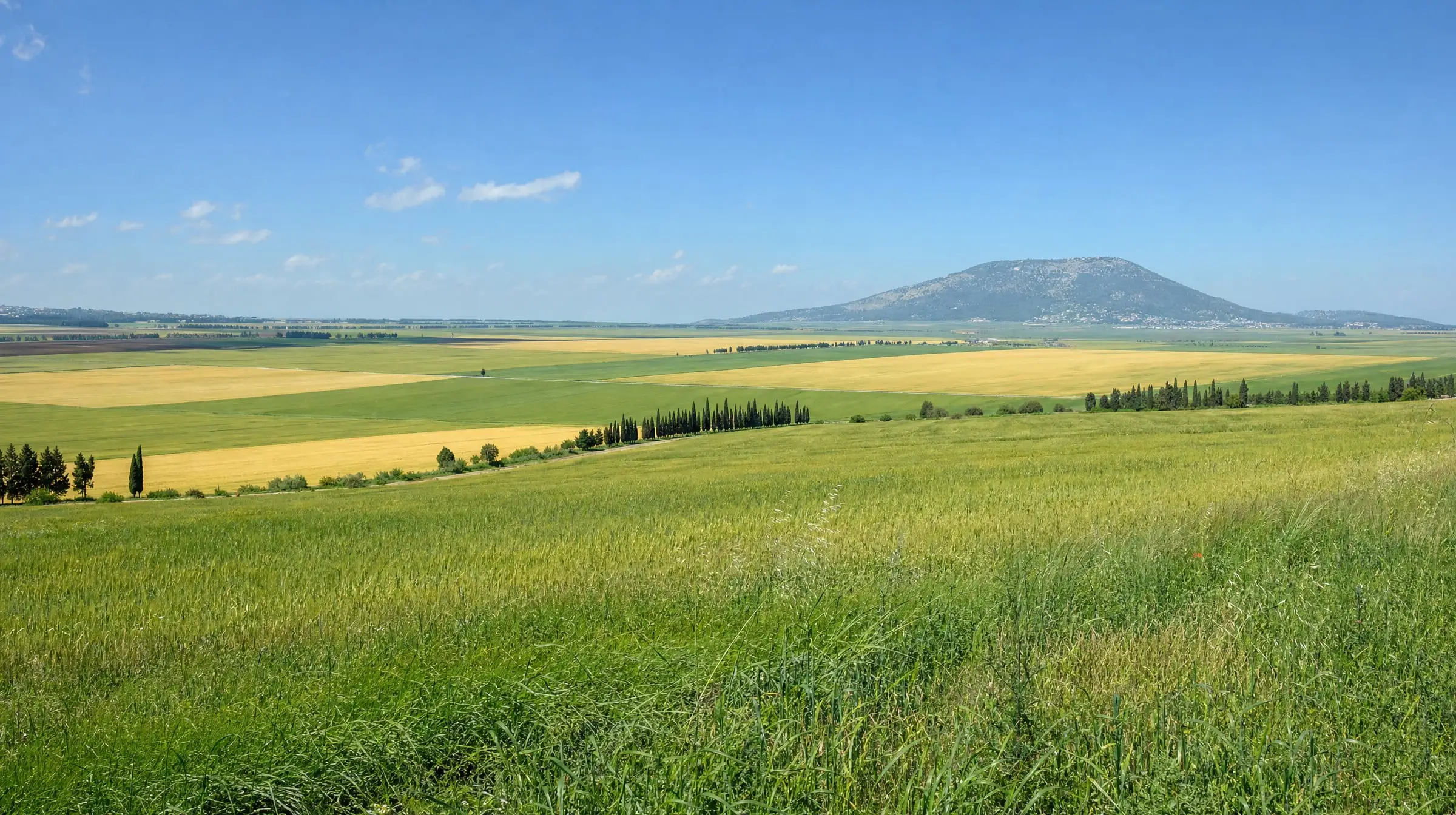
The books of Judges and Kings return to one broad valley again and again. A stream sweeps away an army. A small force surrounds a camp at night. A king wants the vineyard beside his palace.
The name
The town of Jezreel appears in the portion of Issachar (Joshua 19:18). The Brown, Driver and Briggs dictionary reads the name as “G-d sows.” The prophet Hosea draws out that sense.
וְהָאָרֶץ תַּעֲנֶה אֶת־הַדָּגָן וְאֶת־הַתִּירוֹשׁ וְאֶת־הַיִּצְהָר וְהֵם יַעֲנוּ אֶת־יִזְרְעֶאל
“The earth shall answer the grain, the new wine and the oil, and they shall answer Jezreel.”
Hosea 2:24
The next verse begins, “I will sow her for Myself in the land” (2:25).
Deborah and the Kishon
Deborah sends for Barak. He is to gather his men toward Mount Tabor, and Sisera will be drawn to the Kishon stream with his chariots (Judges 4:6-7). Tabor is a dome-shaped mountain in the northeast of the valley. Sisera brings nine hundred chariots of iron (4:13). Barak comes down from the mountain, the army of Sisera falls, and Sisera himself flees on foot (4:14-17). The song that follows sets the battle at Taanach, by the waters of Megiddo (5:19), and then turns to the sky.
מִן־שָׁמַיִם נִלְחָמוּ הַכּוֹכָבִים מִמְּסִלּוֹתָם נִלְחֲמוּ עִם־סִיסְרָא
“From heaven they fought. The stars, from their courses, fought against Sisera.”
Judges 5:20
Gideon at Harod
Midian, Amalek and the people of the East cross over and camp in the valley of Jezreel (6:33). Gideon camps at the spring of Harod, with the camp of Midian to the north, by the hill of Moreh, in the valley (7:1). His army is cut down to three hundred men (7:2-8). At the start of the middle watch they blow their shofars, smash their jars and hold up torches all around the camp, and the camp flees (7:19-22).
Naboth’s vineyard
Naboth of Jezreel had a vineyard beside the palace of Ahab, king of Samaria (I Kings 21:1). Ahab offered him a better vineyard, or its price in silver. Naboth refused.
חָלִילָה לִּי מֵה׳ מִתִּתִּי אֶת־נַחֲלַת אֲבֹתַי לָךְ
“G-d forbid that I should give you the inheritance of my fathers.”
I Kings 21:3
His word is nachalah, inheritance. Jezebel then sends letters under Ahab’s seal. Two worthless men testify, as she directed, that Naboth cursed G-d and king, and he is stoned (21:8-13). Elijah meets Ahab in the vineyard and asks, “Have you murdered, and also taken possession?” (21:19). Years later, King Joram rides out to meet Jehu on that same plot of ground. Jehu kills him and has his body thrown there (II Kings 9:21-26).
The town on the spur
Norma Franklin, an archaeologist at the University of Haifa, describes ancient Jezreel on a rocky spur in the foothills of Mount Gilboa. It looked over the valley at its narrowest point, across from Mount Moreh, with a spring close by.
Excavations led by David Ussishkin of Tel Aviv University and John Woodhead of the British School of Archaeology in Jerusalem uncovered a large rectangular enclosure of the Iron Age. It had towers, a gate, and on three sides a dry moat cut in the rock. The excavators attributed it to the house of Omri, Ahab’s dynasty, around 880 BCE, mainly on biblical grounds. Pottery could not date it closely, and it remains uncertain which phase of building belongs to the time of Ahab.
Read next about the vine among the seven species, or about Asher’s oil in the Galilee.
Sources
- Joshua 19:18: Jezreel in the portion of Issachar.
- Hosea 2:24-25: the earth, Jezreel and the sowing.
- Brown, Driver and Briggs on Jezreel: the meaning of the name.
- Judges 4 and 5:19-21: Deborah, Barak and the song.
- Judges 6:33 to 7:22: Gideon in the valley.
- I Kings 21 and II Kings 9:21-26: Naboth, Elijah and Jehu.
- Mount Tabor, Encyclopaedia Judaica: the mountain’s shape and place.
- Norma Franklin, Why Was Jezreel So Important to the Kingdom of Israel?, The Bible and Interpretation: the setting, the excavations and their dating.
Quotations are given in Hebrew with their references; translations are plain renderings unless stated. This page reports what texts say and what is known about places. It gives no halachic ruling and no legal advice.