The Sharon in the Song of Songs and the Prophets
Updated November 29, 2026
אֲנִי חֲבַצֶּלֶת הַשָּׁרוֹן שׁוֹשַׁנַּת הָעֲמָקִים“I am a rose of the Sharon, a lily of the valleys”
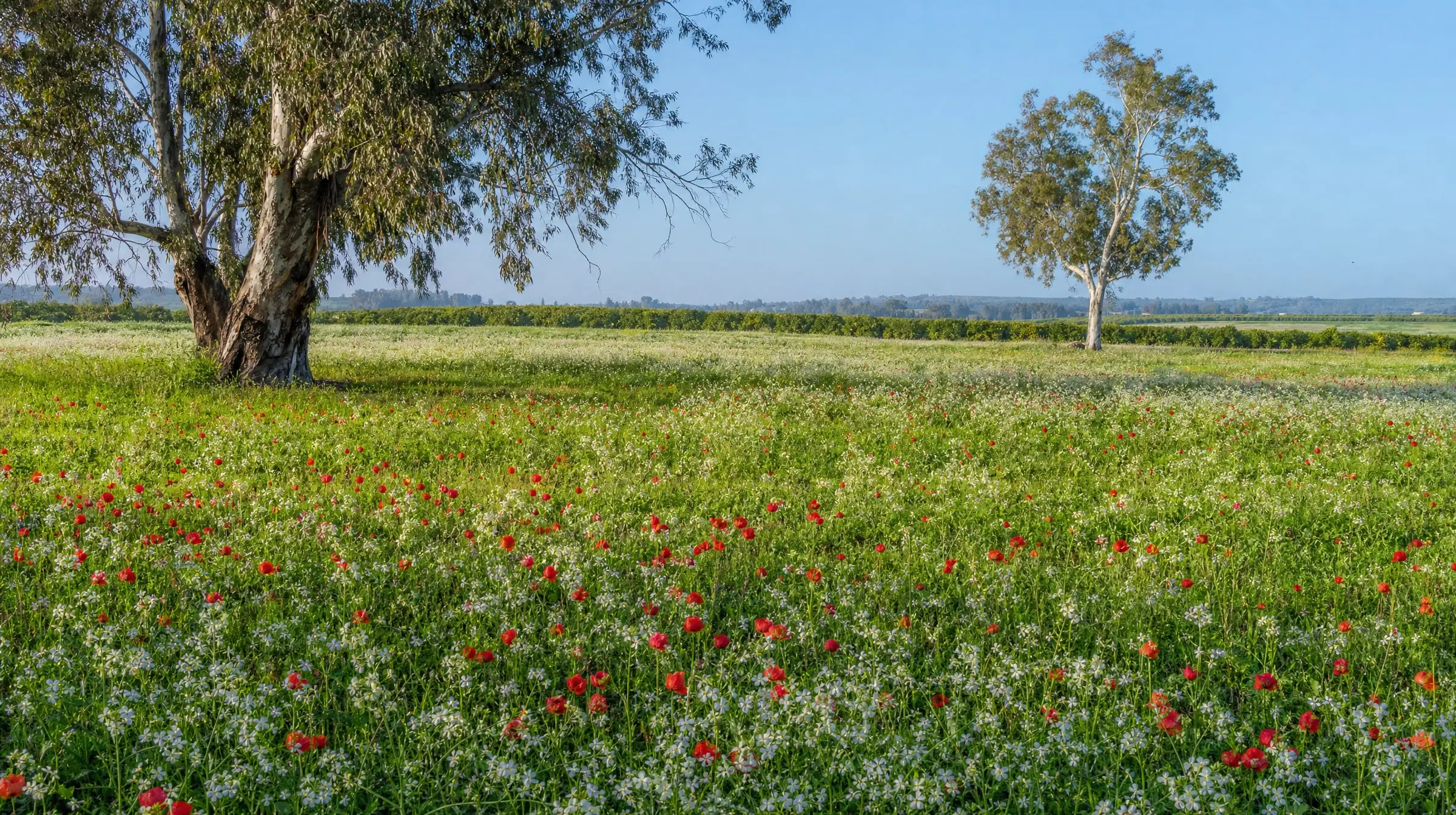
The Sharon is a coastal plain. The Song of Songs names its flower. Isaiah speaks of it in grief and in hope. The Sages remembered its houses, and so does the prayer book of Yom Kippur.
The plain
The Encyclopaedia Judaica runs the Sharon from the Yarkon River north to a spur of Mount Carmel at Zikhron Ya’akov. The plain narrows as it goes north, and it receives more rain than the plain to its south. A king of the Sharon appears in Joshua’s list (Joshua 12:18). In David’s day a man of the Sharon had charge of the herds that grazed there (I Chronicles 27:29).
The flower
The Song says, “I am a chavatzelet of the Sharon, a shoshanah of the valleys.” The 1917 JPS translation has “rose” and “lily,” but the commentators do not settle on one plant. Rashi says the chavatzelet is a shoshanah. He adds that the shoshanah of the valleys is lovelier than that of the hills, since it stays moist where the sun is weaker. Ibn Ezra, explaining the words one by one, glosses chavatzelet as vered, a rose.
In Shir HaShirim Rabbah, Rabbi Yudan says that the flower is called chavatzelet while it is small, and shoshanah when it has grown. The same midrash hears the congregation of Israel speaking in this verse, and saying that she is beloved.
The word chavatzelet returns only once more in Tanakh. Isaiah says that the wilderness will blossom like it (Isaiah 35:1).
The Sharon in Isaiah
Isaiah’s mourning reaches the Sharon, which has become like a desert (33:9). His hope reaches it too. The splendor of the Carmel and the Sharon will be given to the wilderness (35:2). And the plain itself will be home to flocks.
וְהָיָה הַשָּׁרוֹן לִנְוֵה־צֹאן וְעֵמֶק עָכוֹר לְרֵבֶץ בָּקָר לְעַמִּי אֲשֶׁר דְּרָשׁוּנִי
“The Sharon shall be a pasture for flocks, and the valley of Achor a resting place for herds, for My people who have sought Me.”
Isaiah 65:10
Houses of brick
The Torah sends home from battle a man who has built a new house and not yet dedicated it (Deuteronomy 20:5). The Mishnah lists builders who are not sent home. Rabbi Eliezer adds one who built a house of bricks in the Sharon (Sotah 8:3). The Jerusalem Talmud explains that such houses were renewed twice in a sabbatical cycle, and it adds a memory.
אַף כֹּהֵן גָּדוֹל הָיָה מִתְפַּלֵּל עֲלֵיהֶן בְּיוֹם הַכִּיפּוּרִים שֶׁלֹּא יֵיעָשׂוּ בָּתֵּיהֶן קִבְרֵיהֶן
“The High Priest, too, used to pray for them on Yom Kippur, asking that their houses not become their graves.”
Jerusalem Talmud Sotah 8:7:3
The prayer is recalled on Yom Kippur. In the Avodah service of the Ashkenaz Musaf, the High Priest’s words end with the people of the Sharon.
Calves, a yoke and vines
The Mishnah knows the work of the plain. Among goods that may be bought from women in particular regions, it names calves in the Sharon (Bava Kamma 10:9). In the laws of mixed planting, Beit Hillel use the width of the Sharon yoke as a measure (Kilayim 2:6).
In the days of the Mishnah and Talmud, Apollonia was the main port of the southern Sharon. The farming villages around it grew olives and vines, and made wine and oil.
Read next about the olive and the vine among the seven species, or about the Negev.
Sources
- Song of Songs 2:1: the verse. The 1917 JPS translation is among those offered there.
- Rashi, Ibn Ezra and Shir HaShirim Rabbah 2:1: readings of the flower.
- Isaiah 33:9, 35:1-2 and 65:10: the Sharon in the prophet.
- Joshua 12:18 and I Chronicles 27:29: the king and the herds.
- Deuteronomy 20:5, Mishnah Sotah 8:3 and Jerusalem Talmud Sotah 8:7:3: the houses of brick and the High Priest’s prayer.
- Yom Kippur Musaf, the Avodah service: the prayer for the people of the Sharon.
- Mishnah Bava Kamma 10:9 and Kilayim 2:6: calves and the Sharon yoke.
- Land of Israel: Geographical Survey, Encyclopaedia Judaica: the bounds and rainfall of the Sharon.
- Herzliya, Encyclopaedia Judaica: Apollonia and its villages.
Quotations are given in Hebrew with their references; translations are plain renderings unless stated. This page reports what texts say and what is known about places. It gives no halachic ruling and no legal advice.