The Negev: Abraham's Tamarisk and the Wells
Updated November 29, 2026
וַיִּטַּע אֶשֶׁל בִּבְאֵר שָׁבַע“And he planted a tamarisk in Beersheba”
In Genesis the patriarchs travel south into the Negev. There they dig wells, argue over water and swear oaths, and Abraham plants a tree.
South and dry land
The Brown, Driver and Briggs dictionary gives negev as the south country, and as the south. Jastrow’s dictionary of rabbinic usage lists dry soil as well as south. Early in his travels, Abram moves on toward the Negev (Genesis 12:9). A psalm turns the water of that land into a picture of return.
כַּאֲפִיקִים בַּנֶּגֶב
“Like streams in the Negev.”
Psalms 126:4
The full verse asks G-d to bring back our captivity in this way. Rashi explains that as channels of water moisten parched ground, so we shall be refreshed by the return. Those who sow dry land in tears, anxious that nothing will grow, reap in song once the water reaches it.
Wells and an oath
Abraham reproves Abimelech over a well that Abimelech’s servants had seized (Genesis 21:25). He sets seven ewe lambs apart, as a witness that he dug it (21:28-30).
עַל־כֵּן קָרָא לַמָּקוֹם הַהוּא בְּאֵר שָׁבַע כִּי שָׁם נִשְׁבְּעוּ שְׁנֵיהֶם
“Therefore he called that place Beersheba, for there the two of them swore.”
Genesis 21:31
The name holds two ideas. Sheva is seven, and the same letters form the verb for swearing. In Isaac’s time, the wells of Abraham’s day have been stopped up. Isaac digs them again and restores his father’s names for them (26:18). In the valley of Gerar, herdsmen contend with his men for two wells, Esek and Sitnah. The next causes no quarrel, and he names it Rechovot, for now there is room (26:19-22). At Beersheba his servants find water again, and he calls the well Shivah. The city, says the text, is Beersheba to this day (26:32-33).
The tamarisk
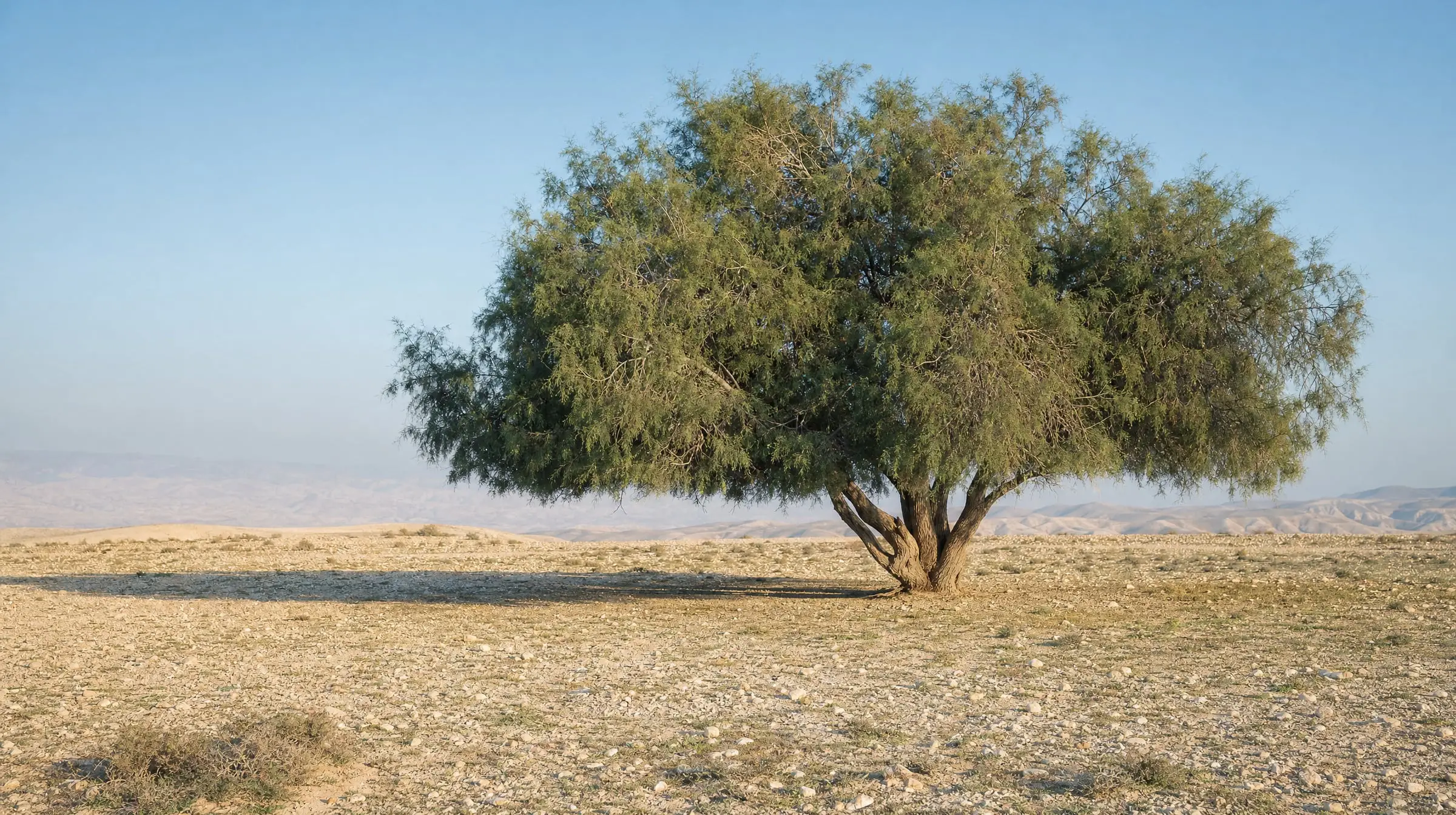
After the oath, Abraham plants an eshel at Beersheba and calls there on G-d’s name (21:33). Scholars identify the eshel as a tamarisk. Tel Aviv University’s Dictionary of Nature Imagery of the Bible records Tamarix aphylla as one identification and Tamarix syriaca as another. It was a tree large enough to shelter people: Saul sits under one (I Samuel 22:6), and the bones of Saul and his sons are buried under one at Jabesh (31:13).
The Sages heard more in the word. Reish Lakish said of it:
מְלַמֵּד שֶׁעָשָׂה פַּרְדֵּס, וְנָטַע בּוֹ כׇּל מִינֵי מְגָדִים
“This teaches that he made an orchard, and planted in it every kind of choice fruit.”
Sotah 10a
Rabbi Yehudah and Rabbi Nechemyah differ: one holds that it was an orchard, the other an inn. Reish Lakish also reads “and he called” as “he made others call.” After travelers had eaten and drunk, they rose to bless Abraham. He told them that they had eaten of what belongs to the G-d of the world, and should thank and bless Him (Sotah 10a and 10b).
Radak sees a planting beside the well, standing as testimony that the well was Abraham’s without dispute. He also cites the Sages’ reading of eshel as an acronym for food, drink and escort. Ibn Ezra says simply that it is a tree.
The mound at Beersheba
Tel Be’er Sheva rises in the middle of a wide valley that receives about 200 millimeters of rain a year. Tel Aviv University excavated it from 1969 to 1976, under Yohanan Aharoni and in the last season Ze’ev Herzog. The mound holds the remains of towns of the Iron Age.
A deep well lies just outside the city gate. Later work found the water level 69 meters below the surface. The Israel Nature and Parks Authority writes that the well may have been cut as early as the first settlement of that age. It adds that some scholars connect it with the well of Genesis.
In the books of Judges and Kings, “from Dan to Beersheba” spans the land (Judges 20:1; I Kings 5:5).
For another of Abraham’s chapters, read about the field he bought. Or browse all eight readings.
Sources
- Genesis 21:22-34 and 26:15-33: the wells, the oath and the tamarisk.
- Genesis 12:9 and Psalms 126:4: the journey south and the streams.
- Rashi on Psalms 126:4: water on parched ground.
- Brown, Driver and Briggs and Jastrow: the word negev.
- I Samuel 22:6 and 31:13: other tamarisks.
- Sotah 10a and 10b: the orchard, the inn and the blessing.
- Radak and Ibn Ezra on Genesis 21:33: the planting as testimony, and the eshel as a tree.
- Tamarix, eshel, Tel Aviv University: identification and description.
- Tel Beer Sheva National Park, Israel Nature and Parks Authority: the setting, the excavations and the well.
- Judges 20:1 and I Kings 5:5: from Dan to Beersheba.
Quotations are given in Hebrew with their references; translations are plain renderings unless stated. This page reports what texts say and what is known about places. It gives no halachic ruling and no legal advice.