Achuzah and Abraham's Purchase of a Field
Updated November 29, 2026
וַיָּקׇם הַשָּׂדֶה וְהַמְּעָרָה אֲשֶׁר־בּוֹ לְאַבְרָהָם לַאֲחֻזַּת־קָבֶר“The field and the cave in it were made firm to Abraham as a burial holding”
Genesis 23 records the first purchase of land in the Torah. Sarah has died, and Abraham seeks a place to bury her. The chapter moves in public, step by step, until the field is his.
A word for a holding
The chapter’s word is achuzah. It belongs to a root that means to take hold. The Brown, Driver and Briggs dictionary gives the noun as “possession,” and the verb as “grasp, take hold.” The verb appears one chapter earlier: the ram is caught, ne’echaz, in the thicket by its horns (Genesis 22:13). The noun first appears at Genesis 17:8, in G-d’s promise to Abraham.
The request
Sarah dies in Kiriath-arba, “that is Hebron,” in the land of Canaan (23:2). Abraham rises from beside her and speaks to the children of Heth.
גֵּר־וְתוֹשָׁב אָנֹכִי עִמָּכֶם תְּנוּ לִי אֲחֻזַּת־קֶבֶר עִמָּכֶם וְאֶקְבְּרָה מֵתִי מִלְּפָנָי
“I am a stranger and a resident among you. Give me a burial holding among you, so that I may bury my dead from before me.”
Genesis 23:4
Rashi explains the burial holding as a holding of ground for a place of graves. The people offer him the choice of their own tombs (23:6). Abraham asks for something definite: the cave of Machpelah, at the end of Ephron’s field, for full silver (23:9). Rashi reads “full” as the whole of its worth, and notes that David used the same words when he bought from Ornan (I Chronicles 21:22).
Ephron answers that he gives Abraham the field and the cave (23:11). Abraham bows, and asks to pay the price of the field (23:12-13).
The price weighed
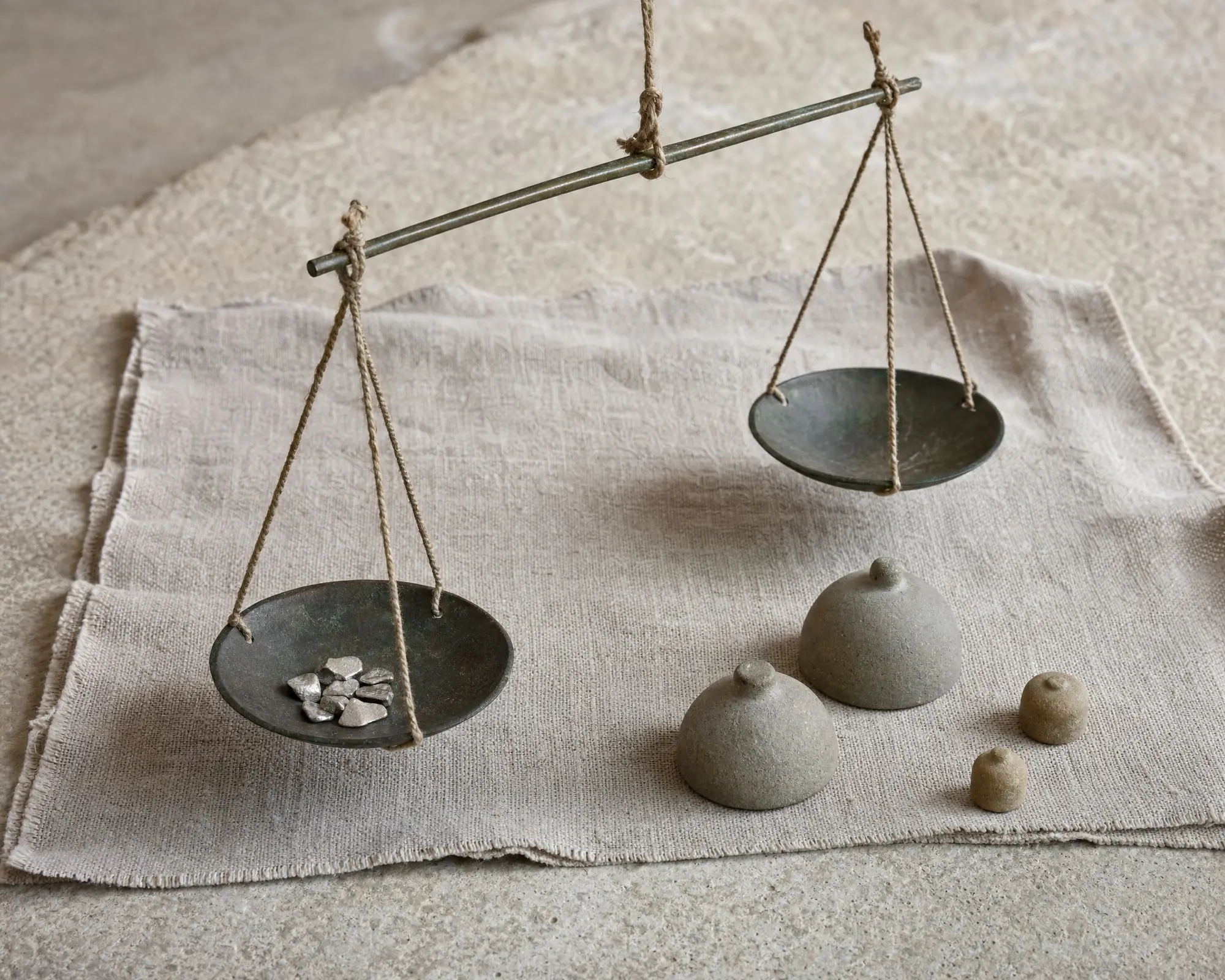
Ephron names a figure as if in passing: land worth four hundred shekels of silver, “what is that between me and you?” (23:15). Abraham weighs it out.
וַיִּשְׁמַע אַבְרָהָם אֶל־עֶפְרוֹן וַיִּשְׁקֹל אַבְרָהָם לְעֶפְרֹן אֶת־הַכֶּסֶף אֲשֶׁר דִּבֶּר בְּאׇזְנֵי בְנֵי־חֵת אַרְבַּע מֵאוֹת שֶׁקֶל כֶּסֶף עֹבֵר לַסֹּחֵר
“Abraham listened to Ephron, and Abraham weighed out to Ephron the silver he had named in the hearing of the children of Heth: four hundred shekels of silver, current with the merchant.”
Genesis 23:16
Before coins, pieces of silver were weighed on scales against stone weights, and the biblical shekel was a unit of weight. Rashi takes “current with the merchant” to mean silver accepted as a full shekel everywhere, since some places used larger shekels. He notices that Ephron’s name is written here without its vav. Ephron said much and did not do even a little, for he took from Abraham those large shekels. Rashi’s source, Bava Metzia 87a, draws a lesson in character: the righteous say little and do much.
Made firm
The sale ends with a list and an audience. The field, the cave in it, and every tree within its borders all around passed to Abraham (23:17).
לְאַבְרָהָם לְמִקְנָה לְעֵינֵי בְנֵי־חֵת בְּכֹל בָּאֵי שַׁעַר־עִירוֹ
“To Abraham as a purchase, before the eyes of the children of Heth, before all who came in at the gate of his city.”
Genesis 23:18
The verb for the transfer is vayakom, literally “it arose.” Rashi first hears a rise in standing: the field passed from a commoner to a king. Then he gives the plain sense: it was secured to Abraham.
The word achuzah comes three times in the chapter: when Abraham first asks (23:4), when he names the cave (23:9), and at the close (23:20). Jacob’s last charge to his sons recalls the field that Abraham bought as a burial holding (49:30), and his sons bury him there (50:13). The Talmud also learns from this sale that a betrothal may be made with money. In Kiddushin 2a, the “taking” of a wife (Deuteronomy 24:1) is linked to Abraham’s words about the price, “take it from me” (23:13).
A deed in writing
Genesis 23 mentions no document. In the book of Jeremiah, a family field is bought with one.
וָאֶכְתֹּב בַּסֵּפֶר וָאֶחְתֹּם וָאָעֵד עֵדִים וָאֶשְׁקֹל הַכֶּסֶף בְּמֹאזְנָיִם
“I wrote the deed and sealed it, I had witnesses attest it, and I weighed the silver on scales.”
Jeremiah 32:10
Jeremiah buys the field from his cousin Hanamel. He hands the deed to Baruch son of Neriah in front of witnesses, and orders the documents placed in an earthen vessel, so that they will last many days (32:12-14). The passage closes with word that houses, fields and vineyards will again be bought in the land (32:15).
The same word, achuzah, returns in the law of the Yovel: see the Liberty Bell and Leviticus 25. For Abraham at Beersheba, see the Negev.
Sources
- Genesis 23: the request, the price, the weighing and the transfer.
- Genesis 17:8 and 22:13: the noun’s first appearance and the verb of the ram.
- Genesis 49:29-32 and 50:13: Jacob’s charge and his burial.
- Brown, Driver and Briggs on achuzah and on the verb: the meaning of the word and its root.
- Rashi on Genesis 23:4, 23:9, 23:16 and 23:17: the burial ground, the full price, Ephron’s shekels and the rise of the field.
- Bava Metzia 87a: saying little and doing much.
- Kiddushin 2a: betrothal by money, learned from Ephron’s field.
- Jeremiah 32:6-15: the deed, the witnesses and the earthen vessel.
- The Currency Exhibit, Part 1, Bank of Israel: silver weighed before coins, and the shekel as a weight.
Quotations are given in Hebrew with their references; translations are plain renderings unless stated. This page reports what texts say and what is known about places. It gives no halachic ruling and no legal advice.