Tu BiShvat: The New Year for Trees in the Mishnah
Updated November 29, 2026
בְּאֶחָד בִּשְׁבָט, רֹאשׁ הַשָּׁנָה לָאִילָן, כְּדִבְרֵי בֵית שַׁמַּאי. בֵּית הִלֵּל אוֹמְרִים, בַּחֲמִשָּׁה עָשָׂר בּוֹ“On the first of Shevat is the new year for the tree, according to Beit Shammai. Beit Hillel say: on the fifteenth of that month”
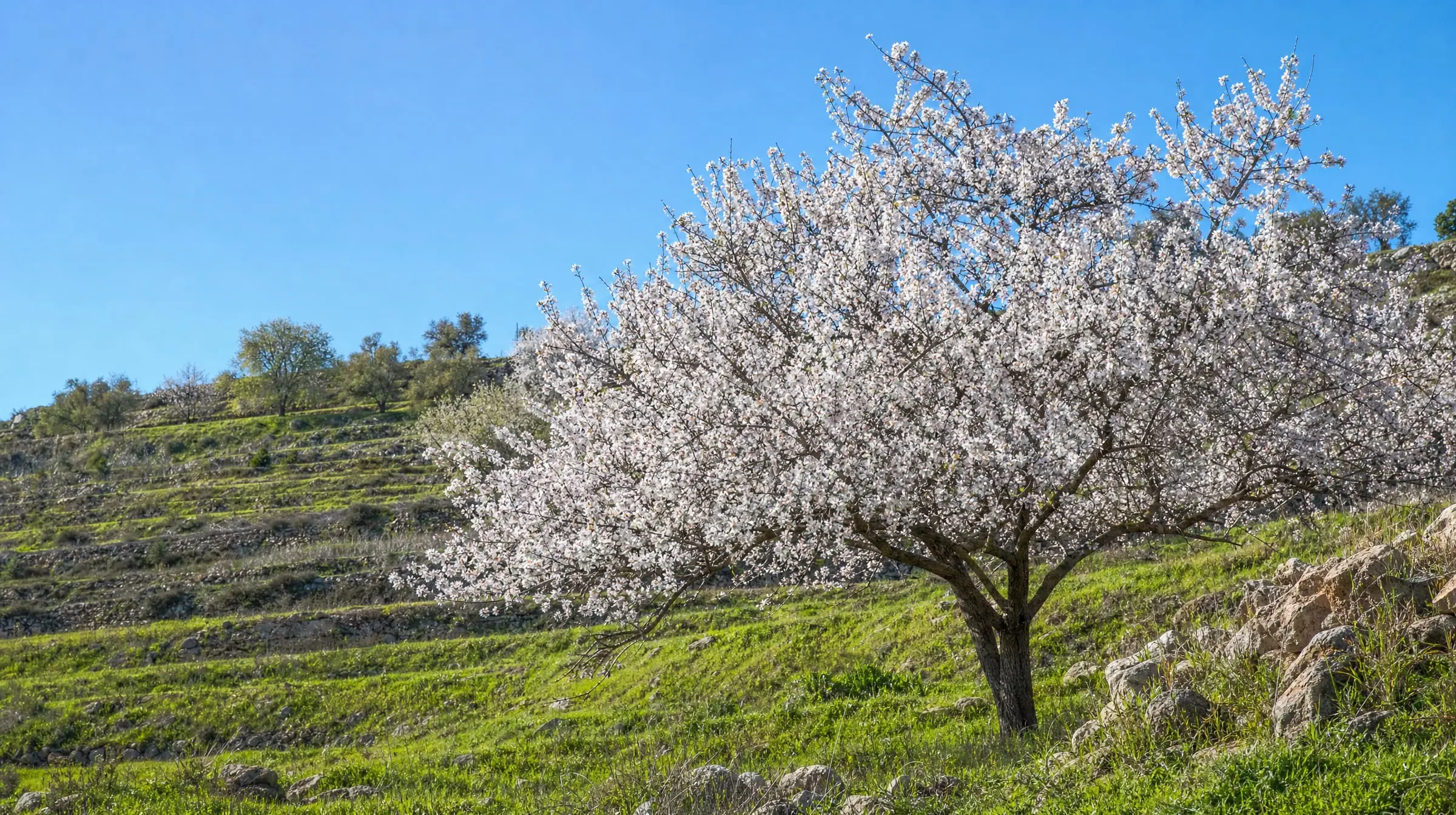
The fifteenth of Shevat enters the Mishnah as a date for the tree. It stands in a list of four new years. Here is the list, and then what the Talmud and later writers drew from it.
Four new years
אַרְבָּעָה רָאשֵׁי שָׁנִים הֵם. בְּאֶחָד בְּנִיסָן רֹאשׁ הַשָּׁנָה לַמְּלָכִים וְלָרְגָלִים
“There are four new years. On the first of Nisan is the new year for kings and for festivals.”
Mishnah Rosh Hashanah 1:1
The first of Elul is the new year for the tithe of animals, though Rabbi Elazar and Rabbi Shimon place it on the first of Tishrei. The first of Tishrei is the new year for counting years, for the sabbatical and Yovel years, for planting and for vegetables. Last comes the tree. Beit Shammai set its new year on the first of Shevat. Beit Hillel set it on the fifteenth.
What the date divides
This new year is a line in the accounts of the orchard. Rashi explains that it concerns tithes. Fruit that set before Shevat is not tithed together with fruit that set after it, because for a tree the year follows the setting of the fruit.
Why Shevat
The Gemara asks why the line falls in this month. Rabbi Elazar answers in the name of Rabbi Oshaya.
הוֹאִיל וְיָצְאוּ רוֹב גִּשְׁמֵי שָׁנָה, וַעֲדַיִין רוֹב תְּקוּפָה מִבַּחוּץ
“Since most of the year’s rains have fallen, while most of the season is still to come.”
Rosh Hashanah 14a
The Gemara restates it: although most of the season remains, most of the rain has already come. Rashi fills in the picture. The main time of rain is past, the sap has risen in the trees, and from now on the fruit sets. The Encyclopaedia Judaica gives the reason in the same terms: most of the annual rain in the Land of Israel falls before the date.
Rabbi Akiva’s etrog
A baraita on the same page tells that Rabbi Akiva picked an etrog on the first of Shevat and set aside two tithes from it. It explains that one tithe followed Beit Shammai and the other Beit Hillel. The Gemara then says that he was unsure whether Beit Hillel had named the first of the month or the fifteenth.
Rabbi Yose son of Rabbi Yehudah finds the doubt elsewhere. Rabban Gamliel holds that an etrog is tithed according to the time it is picked, like a vegetable. Rabbi Eliezer holds that it follows the tree in every way (Bikkurim 2:6). On this account Rabbi Akiva acted to satisfy both (Rosh Hashanah 14b).
Later generations
The Shulchan Arukh lists the fifteenth of Shevat among the days on which the custom is not to say tachanun. The Magen Avraham records that Ashkenazim have the custom of eating many kinds of tree fruit on the day.
The Encyclopaedia Judaica describes an Ashkenazi custom in Europe of eating fifteen kinds of fruit, with preference for fruit of the Land of Israel. It relates that under the influence of the sixteenth-century kabbalists of Safed, the Sephardi liturgy and customs of the day grew, and spread to communities in Europe, Asia and North Africa. An order of service for the day, modeled on the Pesach Seder with four cups of wine, was later put into print. How the tithes apply today, and what to do on the day, are questions for your own rabbi.
For the fruit trees in the Torah’s praise of the land, read about the seven species. The Yovel, whose year turns on the first of Tishrei, has its own page.
Sources
- Mishnah Rosh Hashanah 1:1: the four new years.
- Rashi on Rosh Hashanah 2a: tithes and the setting of fruit.
- Rosh Hashanah 14a and 14b: the reason for Shevat, and Rabbi Akiva’s etrog.
- Rashi on Rosh Hashanah 14a: rain and rising sap.
- Mishnah Bikkurim 2:6: the etrog between tree and vegetable.
- Shulchan Arukh, Orach Chayim 131:6: tachanun.
- Magen Avraham 131:16: the custom of eating fruit.
- Tu Bi-Shevat, Encyclopaedia Judaica: the rains, the customs, Safed and the printed order of service.
Quotations are given in Hebrew with their references; translations are plain renderings unless stated. This page reports what texts say and what is known about places. It gives no halachic ruling and no legal advice.